Why sargassum keeps coming to the Riviera Maya’s luxury shores
Step onto a pristine stretch of sand in the Mexican Caribbean and you immediately understand why high end travelers flock to this coastline. Then a line of brown sargassum seaweed at the water’s edge reminds you that even the most polished resort depends on fragile coastal ecosystems. On a luxury or premium stay, understanding this tension between beauty and environmental pressure helps you choose hotels that treat sargassum management as part of serious sustainability rather than just a cosmetic fix.
The seaweed washing onto beaches in Quintana Roo is mainly pelagic sargassum, a free floating algae that drifts across coastal waters in vast mats. Ocean currents and warmer nearshore waters help form what scientists call the great Atlantic sargassum belt, a shifting mass that stretches from West Africa across the Atlantic Sargasso Sea to the Caribbean. According to satellite monitoring by the University of South Florida’s Optical Oceanography Lab, this belt has expanded dramatically since 2011, and when it reaches the Mexican Caribbean it can blanket long coastal areas from Cancún’s Hotel Zone to Playa del Carmen and further down the Riviera Maya.
For luxury hotels, the temptation is to treat sargassum as simple waste and focus only on fast disposal. Heavy machinery on the sand can clear a beach quickly, yet repeated passes damage sand structure, compact dunes and disturb sea turtles that nest along these coastal areas. The most forward looking properties now see seaweed collection, coastal resilience and careful environmental management as a single strategy rather than separate projects, often guided by standards from programs such as EarthCheck or the Biosphere Responsible Tourism certification.
The environmental cost of business as usual on sargassum
When sargassum seaweed piles up and rots, it releases hydrogen sulfide, a gas that smells like rotten eggs and can irritate eyes and lungs. In enclosed marine areas or small coves, thick mats of seaweed also reduce oxygen in coastal waters, stressing fish and nearby coral reefs that already face warming and pollution. The Mexican government’s National Institute of Ecology and Climate Change (INECC) has warned that unmanaged accumulations can alter beach chemistry and nearshore habitats, so for travelers paying for premium rooms in Mexico’s Caribbean resorts, the issue is not only visual but deeply environmental.
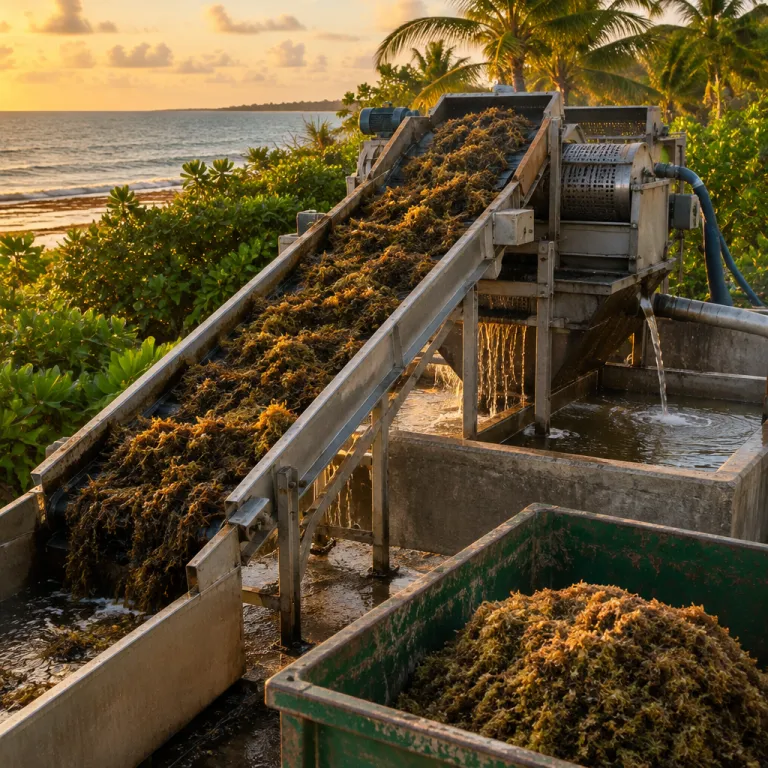
Traditional sargassum management has relied on pushing seaweed into mounds with heavy machinery and trucking it to landfills as undifferentiated waste. This quick disposal approach may clear hotel frontages, yet it simply shifts the environmental problem inland, where decomposing piles can leach into groundwater and affect local communities. In some coastal zones, barriers placed in nearshore waters redirect floating mats, but if the collected biomass is not reused, the circular potential of this marine resource is lost and municipal systems remain under pressure; for example, Quintana Roo authorities reported removing hundreds of thousands of tons of sargassum along the coast between 2018 and 2023.
Responsible tourism in the Riviera Maya now means asking how hotels treat both single events and recurring sargassum seasons as part of a broader circular economy. Before booking, look for properties that talk openly about their environmental projects, not just their infinity pools and food offerings. If you plan snorkeling or reef safe activities, pair your hotel choice with practices outlined in guides to responsible snorkeling in the Mexican Caribbean, because healthy coral reefs, reduced nutrient pollution and balanced seaweed management are closely linked.
From nuisance to resource: circular projects using sargassum
Across the Riviera Maya, a quiet shift is underway as local teams test ways to turn sargassum waste into value. Architects and engineers in Quintana Roo have piloted construction blocks that blend dried sargassum with other materials, reducing pressure on sand extraction and offering new options for coastal communities. One widely cited example is the work of Mexican company Sargablock, which has developed bricks using compacted seaweed and has supplied prototypes for small buildings in the region. For sustainability minded guests, these circular projects show how innovative sargassum reuse, long term Riviera Maya conservation and luxury tourism can align rather than compete.
Other initiatives in the Mexican Caribbean explore using sargassum seaweed as a feedstock for paper, textiles or bio based panels, each project trying to balance environmental safety with economic potential. Experimental plants look at converting pelagic sargassum into biogas or biochar, while agronomists test carefully processed seaweed as a soil amendment, always monitoring for salt and heavy metal content before any use in food related chains. None of these solutions is perfect yet, but together they move the region from linear disposal to a more circular economy that respects both ocean dynamics and coastal ecosystems; as marine scientist Chuanmin Hu has noted in peer reviewed work on the Atlantic belt, “management responses must evolve as rapidly as the blooms themselves.”
Hotels that engage with these pilots often work with local cooperatives in Playa del Carmen, Puerto Morelos or smaller Riviera Maya towns rather than handling everything in house. In Puerto Morelos, for instance, community groups have collaborated with researchers from local universities to test sargassum based compost for non food crops, while artisans in Playa del Carmen experiment with seaweed infused paper and design pieces. When you see a property highlight partnerships with certified recyclers, municipal programs or research institutions, you are looking at a more credible environmental management strategy. To align your stay with these efforts, focus on eco certified hotels in Cancún and the Riviera Maya, and use resources that explain what serious sustainability certifications actually mean for your stay.
How luxury hotels in Cancún and the Riviera Maya are adapting
Not all five star properties along the Mexican Caribbean handle sargassum in the same way. Some still prioritize a visually clean shoreline at any cost, relying on constant heavy machinery use and trucking seaweed away without clear tracking of its final disposal. Others treat seaweed recovery, coastal protection and guest experience as a single design brief that shapes everything from beach layout to back of house operations, often integrating guidance from marine biologists or local NGOs.
More thoughtful resorts now use lighter equipment on the sand, manual crews at dawn and floating barriers in nearshore waters that divert seaweed before it reaches fragile zones. These systems protect sand structure, reduce disturbance to nesting sea turtles and limit the impact on nearby coral reefs, especially in areas where coastal waters are already stressed. Some properties in Cancún’s Hotel Zone and around Playa del Carmen also coordinate with municipal sargassum management programs, ensuring that collected biomass enters vetted circular projects instead of unmanaged dumps, and a few publish seasonal updates on volumes removed and destinations for the material.
For a solo explorer choosing between Cancún and the Riviera Maya, the right hotel can anchor a more sustainable itinerary. Use detailed comparisons such as this guide to luxury stays in Cancún versus the Riviera Maya to match your style with areas that invest in environmental resilience. Then, when you read property descriptions, look for clear references to coastal ecosystems, marine conservation partners and transparent reporting on how sargassum waste is handled throughout the season, including whether the hotel supports specific community projects or scientific monitoring.
Practical ways travelers can support sargassum innovation
As a guest, your choices send signals that shape how hotels in Mexico’s Caribbean invest in sustainability. When you ask pre booking questions about sargassum management, you show that environmental performance matters as much as spa menus or food concepts. Over time, this pressure nudges properties toward more ambitious seaweed reuse initiatives, broader Riviera Maya sustainability programs and deeper collaboration with local communities.
Before reserving, check whether a hotel shares information about its coastal management plan, including how it protects sand dunes, sea turtles and nearby coral reefs. Ask if collected sargassum seaweed goes to certified recycling projects or simply to landfill disposal, and whether the property supports research into circular economy uses such as construction materials or safe agricultural inputs. On site, notice whether heavy machinery dominates the beach at all hours or if teams work more discreetly at cooler times to reduce stress on marine life and guests, and whether staff can explain where the seaweed goes after it leaves the sand.
Beyond the hotel grounds, consider visiting community led projects in Playa del Carmen, Puerto Morelos or smaller Riviera Maya towns that experiment with sargassum based products. Buying a piece made from recycled seaweed or supporting a workshop that explains the Atlantic sargassum cycle turns a seasonal nuisance into part of your travel story. In the long run, luxury tourism that respects ocean dynamics, coastal ecosystems and the realities of the great Atlantic sargassum belt will feel more rewarding than any perfectly raked but ecologically fragile beach, and your spending will help scale up the most promising local solutions.
FAQ
Why does sargassum keep arriving on Cancún and Riviera Maya beaches ?
Sargassum reaches Cancún and the Riviera Maya because large mats of pelagic sargassum form in the Atlantic, then drift west as part of the great Atlantic sargassum belt. Ocean currents and warmer coastal waters in the Mexican Caribbean guide these mats toward Quintana Roo, where they land on popular tourism beaches. This pattern recurs seasonally, and monitoring by institutions such as NOAA and the University of South Florida shows that bloom intensity can vary widely from year to year, so hotels must plan long term environmental management rather than treating each arrival as an isolated event.
Is sargassum dangerous for swimmers and marine life ?
Fresh sargassum in the ocean is not usually harmful to swimmers, but thick accumulations in nearshore waters can reduce visibility and make entry uncomfortable. When large piles rot on the sand, they release hydrogen sulfide, which can irritate eyes and lungs, especially for sensitive guests. For marine life, unmanaged sargassum can smother coral reefs and seagrass beds, while poorly timed beach cleaning can disturb nesting sea turtles and other coastal species, so the goal is not to remove every strand but to manage volumes and timing carefully.
How are hotels turning sargassum into something useful ?
Some hotels and local partners in the Riviera Maya send collected sargassum to facilities that experiment with construction blocks, panels or other building materials. Others support research into using processed seaweed for bioenergy or as a carefully controlled soil amendment, always checking for salt and contaminants before any agricultural or food related use. These efforts are early steps toward a circular economy, where sargassum waste becomes a resource instead of an environmental burden, and where tourism revenue helps fund innovation rather than just short term cleanup.
What should I ask a hotel about its sargassum policy before booking ?
Ask whether the property has a documented sargassum management plan that protects sand dunes, sea turtles and nearby coral reefs. Check if they use heavy machinery sparingly, rely on manual cleaning where possible and coordinate with certified recyclers for responsible disposal or reuse. A hotel that can explain its role in seaweed recovery, local partnerships and Riviera Maya sustainability projects is more likely to treat environmental issues with the same care it gives to guest services.
Can I still enjoy a luxury beach holiday during sargassum season ?
You can enjoy a high end stay even when sargassum is present, especially if you choose hotels that manage it thoughtfully and communicate clearly. Look for properties with multiple pools, elevated decks and access to less affected areas, along with activities that highlight cenotes, inland food scenes and cultural sites away from the immediate shoreline. By supporting places that invest in coastal ecosystems and circular projects, you help ensure that luxury tourism and environmental resilience grow together, even in years when the Atlantic belt sends more seaweed than usual.