Clear guide to the Cancún Hotel Zone: layout by kilometre marker, beach conditions, all-inclusive vs non-inclusive resorts, who it suits best, and how to use it as a base for day trips.
Cancún Hotel Zone: Best Areas, Standout Resorts & How to Choose
What the Cancún Hotel Zone really is
From kilometre marker 0 near downtown to the far curve by Punta Nizuc, the Cancún Hotel Zone is a 22 km ribbon of sand, lagoon and concrete that concentrates more than 190 hotels and around 35,000 rooms, according to figures from the local tourism board. This is not a vague “resort area” but a clearly defined strip, officially called the Zona Hotelera, built on a barrier island between the Caribbean Sea and the Nichupté Lagoon. You feel it the moment you cross the bridge from mainland Cancún Mexico and the skyline shifts from low houses to glass-fronted towers.
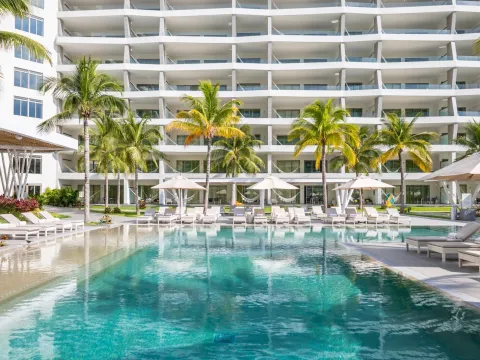
For a first-time tourist, this zone is the most straightforward place to stay. Almost every property sits either directly on the beach or a few steps from it, with the Caribbean Sea visible from many lobbies and pools. The atmosphere is unapologetically resort driven: palm-lined driveways, inclusive resorts with wristbands, star hotel towers stacked along Boulevard Kukulcán. If you want to wake up, walk down from your room and be on soft white sand in under five minutes, this is where that happens.
There is a trade-off. The Hotel Zone is convenient, safe and intensely serviced, but it is not the best place for those seeking a quiet village feel or deep immersion in everyday life in Mexico. You come here for ease, for curated tourism, for a polished base to explore the wider Riviera Maya rather than for a sense of discovery on your doorstep. Knowing that helps you decide whether a Cancún hotel in this zone matches your travel style.
How the Hotel Zone is laid out: choosing your stretch
Near kilometre 8.5, around the curve by Playa Gaviota Azul and Punta Cancún, the Hotel Zone feels almost urban. Here, high-rise hotels cluster close together, nightlife hums, and tourists spill out onto sidewalks late into the night. This central section suits travellers who want to walk to bars, restaurants and shopping centres without relying on taxis. The beach is still beautiful, but the mood is energetic rather than serene.
Drive south along Boulevard Kukulcán towards kilometre 16 and the rhythm changes. Resorts become more spaced out, gardens larger, and the soundscape softens to waves and distant music. This mid to southern stretch of the zone is where many inclusive resorts focus on spa rituals, long pools and a more residential feel. If you picture lingering in a fitness center with sea views before breakfast, then retreating to a quiet lounger, this is your terrain.
The northern entrance to the Zona Hotelera, closer to kilometre 2, looks towards Isla Mujeres and the calmer waters of Bahía de Mujeres. Beaches here are often more sheltered, which can be appealing for families or less confident swimmers. However, you are farther from the liveliest nightlife and some of the most famous playa spots. In short, central zone Cancún is better for social energy, the far south for space and resort seclusion, and the north for gentle water and easy boat access to nearby islands.
Beach character, sea conditions and seasons
Sand in the Hotel Zone is famously pale and fine, but not every beach feels the same. On the eastern side, facing the open Caribbean Sea, the surf can be powerful, especially on windier days. Strong swimmers often prefer this side for the drama of the waves, while families may gravitate to more protected stretches. On the northern curve, facing towards Isla Mujeres, the water is typically calmer, with a lagoon-like feel that invites long, lazy swims.
Season matters. January in Cancún tends to bring clear light, lower humidity and a steady flow of international tourists escaping winter, which makes the Hotel Zone feel lively but not oppressive. By contrast, late December around the festive period is one of the busiest moments of the year, with resorts at full capacity and every beach bed claimed early. If you value space and a quieter resort atmosphere, consider the shoulder months just before or after these peaks.
Weather patterns also shape the experience. The Caribbean Sea can show different moods within a single week, from glassy turquoise to choppier, steel-blue waves. When you look at a calendar to plan, do not obsess over daily forecasts; instead, think in terms of broader windows and be comfortable changing dates slightly if your schedule allows. A flexible approach often yields a better balance between sunshine, crowds and the overall feel of the Hotel Zone.
All-inclusive vs non-inclusive: how to choose in the Hotel Zone
On this narrow strip of land, the dominant model is the all-inclusive resort. Many Cancún hotels in the zone operate as inclusive resorts, bundling meals, drinks and activities into a single package. For travellers who prefer predictability and the ease of not signing a bill at every turn, this can be the best option. You can spend entire days moving between pool, beach and restaurant without ever leaving the property, which some guests find deeply relaxing.
There is another side to the story. Non-inclusive or partially inclusive hotels in the Zona Hotelera tend to attract travellers who want more freedom to explore local restaurants, beach clubs and nearby sites. If you plan to spend days visiting Mayan archaeological areas along the Riviera Maya, taking a ferry to Isla Mujeres, or heading down to Playa Mujeres for a different beach scene, paying for every meal inside your resort may feel unnecessary. In that case, a more flexible board plan often makes sense.
Consider your own habits honestly. If you know you will be out on excursions to Playa del Carmen, Tulum or inland Maya sites several days in a row, an all-inclusive package may go underused. On the other hand, if your ideal holiday is a single, beautifully run resort where you can alternate between the fitness center, spa and beach without logistical effort, the inclusive model in the Hotel Zone is hard to beat. The right choice is less about theory and more about how you actually travel.
Who the Cancún Hotel Zone suits best (and who should look elsewhere)
Travellers who value ease above all tend to thrive in the Hotel Zone. If you want a star hotel with polished service, a curated activity programme and the ability to arrange almost any excursion from a single concierge desk, this is your natural base in Cancún Mexico. Families appreciate the straightforward logistics, from kids’ pools to on-site entertainment, while many couples enjoy the combination of beach time and access to nightlife without long transfers.
By contrast, travellers seeking a quieter, more low-rise environment often prefer the broader Riviera Maya, where resorts are tucked into jungle settings between Cancún and Tulum. Areas like Playa Mujeres, just north of the main strip, offer a different rhythm again, with more space between resorts and views back towards the skyline of the Hotel Zone rather than being inside it. If you dream of walking out to small local cafés or watching everyday life unfold in a Mexican town square, staying in downtown Cancún or further south along the coast may suit you better.
Think of the Hotel Zone as a highly efficient tourism machine. It excels at delivering a seamless resort experience, quick access to tours, and a beach that is always groomed and ready. It is less successful at offering a sense of serendipity or raw local character. If you are comfortable with that trade-off, the zone becomes a very practical, even luxurious, launchpad for day trips to Isla Mujeres, Chichén Itzá or the cenotes scattered through the Yucatán Peninsula.
Practical tips for booking in the Hotel Zone
When you start comparing hotels in the Cancún Hotel Zone, location along Boulevard Kukulcán should be your first filter. Check the kilometre marker: lower numbers place you closer to downtown and the departure points for buses and some tours, mid-range numbers cluster you near shopping and nightlife, and higher numbers towards Punta Nizuc give you a more secluded resort feel. This simple detail often matters more than many marketing claims.
Next, look closely at the beach itself. Not every resort has the same width of sand or the same sea conditions. Some stretches are more exposed to waves, others more sheltered; some properties sit directly on the Caribbean Sea, while a few are lagoon side with beach access a short walk away. If daily swimming is central to your stay, prioritise a hotel with a generous beachfront and clear descriptions of the water conditions.
Finally, use the booking tools at your disposal with intention. When you see a calendar select interface, play with changing dates by a day or two to see how availability and options shift. Think of it as using keyboard shortcuts in your planning: small, precise adjustments rather than broad, random searches. Mark key preferences for you and your travelling companions — such as access to a fitness center, proximity to departure marinas for Isla Mujeres, or a quieter section of the zone — and press question marks against any detail that is unclear until you have a complete picture. A few extra minutes of careful comparison usually translate into a stay that feels tailored rather than generic.
Day trips and wider context: using the Hotel Zone as a base
From kilometre 4 near Puerto Cancún, boats leave regularly towards Isla Mujeres, turning the Hotel Zone into a convenient jumping-off point for island days. You can spend the morning on Playa Norte, one of the region’s most photogenic beaches, and be back on your resort balcony by sunset. To the south, the road out of the zone connects quickly to the highway that runs along the Riviera Maya, putting Playa del Carmen, cenotes and Maya archaeological sites within comfortable reach.
For many tourists, this is the real strength of staying in a Cancún hotel in the zone: you sleep in a polished resort environment but can access a wide range of experiences without complicated logistics. One day might be dedicated to snorkelling over reefs, another to exploring inland ruins, another to a long lunch in a beach club further down the coast. The Hotel Zone functions as a well-serviced hub for this kind of varied itinerary.
When you plan, think in terms of balance. Too many excursions and you will barely experience the beach and facilities you are paying for; too few and you may feel you have missed the richness of tourism in this part of Mexico. A considered mix — perhaps two or three substantial outings in a week-long stay, with the rest of the time spent enjoying your chosen resort — tends to work best. In that sense, the Hotel Zone is less an isolated bubble and more a comfortable base camp for the wider Caribbean coast.
Is the Cancún Hotel Zone a good place to stay for a first visit?
For a first visit, the Cancún Hotel Zone is usually an excellent choice. The area concentrates a large number of hotels, offers direct access to the beach, and makes it easy to arrange tours and transfers. You sacrifice some local neighbourhood atmosphere, but you gain simplicity, safety and a wide range of resort styles to choose from.
What is the difference between the Hotel Zone and the Riviera Maya?
The Hotel Zone is a 22 km urbanised strip in Cancún with high-rise resorts between the sea and the lagoon, while the Riviera Maya is the longer coastal region stretching south towards Tulum. The Riviera Maya tends to offer more jungle settings and distance between resorts, whereas the Hotel Zone focuses on convenience, dense tourism infrastructure and immediate beach access.
Are all hotels in the Cancún Hotel Zone all-inclusive?
Not all hotels in the Cancún Hotel Zone are all-inclusive, although many are. You will find a mix of fully inclusive resorts, properties with optional meal plans, and hotels that operate on a more traditional room-only or bed-and-breakfast basis. Choosing between them depends on how much time you plan to spend on property versus exploring the wider area.
Is the beach better in the Hotel Zone or in Playa Mujeres?
The beach in the Hotel Zone offers iconic white sand and a lively atmosphere, with some stretches facing stronger Caribbean surf. Playa Mujeres, just north of Cancún, usually has calmer waters and a quieter feel, with more space between resorts. The Hotel Zone is better if you want energy and easy access to services, while Playa Mujeres suits those seeking a more tranquil environment.
How many hotels are there in the Cancún Hotel Zone?
The Cancún Hotel Zone contains more than 190 hotels and around 35,000 rooms along its 22 km length. This density of accommodation makes it one of the most concentrated resort areas in Mexico and ensures a wide variety of options for different traveller profiles.