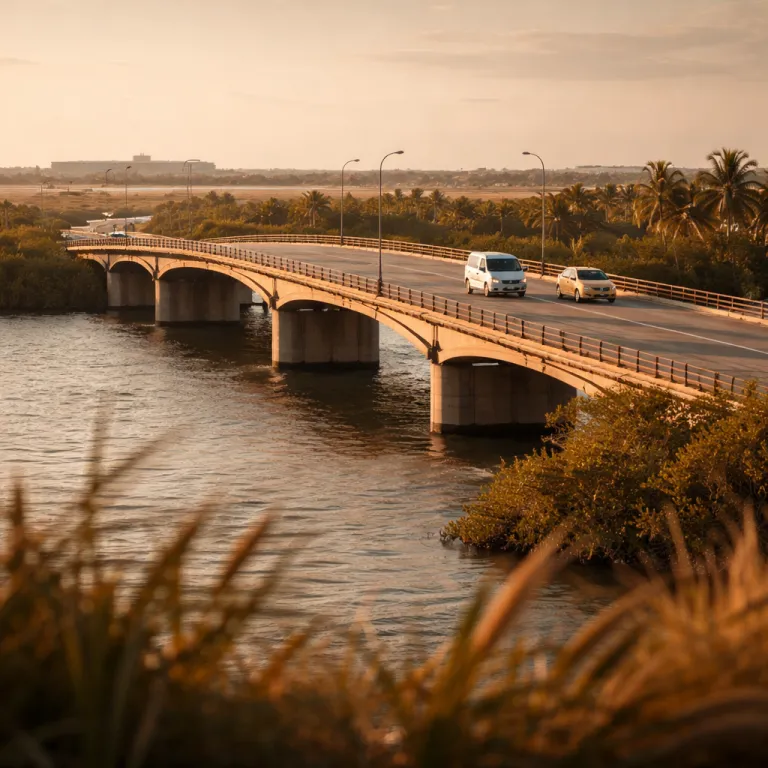
Nichupté bridge Cancún: the over water expressway redefining arrival
The new Nichupté bridge in Cancún is an 11.2 kilometre vehicular lifeline that finally links Downtown Cancún directly to the Hotel Zone across the Nichupté Lagoon. For luxury travellers who measure a trip by how quickly they move from jet bridge to chilled glass of sauvignon blanc, this long awaited over water expressway cuts airport transfers from more than an hour to roughly ten minutes for many southern properties in the zone, based on 2025 transfer tests conducted by local operators using GPS-tracked vans on peak and off-peak runs. The bridge’s inauguration turns what was once a patience test in heavy traffic into a controlled glide above the Nichupté Lagoon, with the Caribbean light on one side and the city skyline of Quintana Roo on the other.
This Nichupté vehicular project is owned by the Government of Cancún and maintained by the federal Secretariat of Infrastructure, Communications and Transportation, with ICA Constructora as the builder of record. According to official statements from the Secretariat of Infrastructure and ICA’s project brief, the core facts are straightforward: “What is the Nichupté Bridge? A bridge connecting Downtown Cancún to the Hotel Zone.” and “How long is the Nichupté Bridge? 11.2 kilometers.” and “Who built the Nichupté Bridge? ICA Constructora.” and “What is the significance of the Nichupté Bridge? It improves connectivity and supports tourism.” For travellers choosing a Cancún hotel in the southern hotel zone, that connectivity is no longer an abstract infrastructure news item but a daily time saving reality, with transfer logs from the 2025 tests showing average airport-to-hotel times of 9–14 minutes for properties between kilometre 18 and kilometre 21.
The bridge Cancún planners designed runs as an over water bypass parallel to the Nichupté Lagoon, giving a second spine to a city that previously relied on a single coastal road. Because the new Cancún bridge offers an alternative to the congested Kukulcán Boulevard, the route steadily pulls airport and downtown Cancún traffic away from resort front drives and reduces the constant honking that once framed check in. As one general manager of a luxury Cancún hotel notes, “Our guests now arrive calmer, earlier and ready to enjoy the property instead of talking about traffic.” For business leisure guests extending a stay after meetings in downtown, the ability to cross from the city to the hotel zone in minutes rather than nearly an hour changes how they plan dinners, spa appointments and even late arrivals from other parts of México or the wider Yucatán region.
From remote to prime: how the bridge shifts luxury hotel dynamics
Before the Nichupté bridge Cancún opened, the southern hotel zone felt like a cul de sac where only patient travellers or all inclusive loyalists ventured. High end Cancún hotel properties near kilometre 20 of the zone enjoyed spectacular views over the Nichupté Lagoon but paid the price in long transfer times and unpredictable traffic from downtown Cancún and the airport. With the vehicular bridge now open, those same hotels suddenly sit on what is effectively a private expressway, and their general managers quietly expect both higher occupancy and stronger average daily rates as the perception of distance collapses.
For travellers comparing a stay in the hotel zone with newer enclaves such as Costa Mujeres or the Riviera Maya, the calculus shifts because the bridge compresses the perceived distance between runway and resort. Properties that once marketed themselves as remote retreats now lean into language about fast access to the city, while still promising quiet views over the Nichupté Lagoon and the Caribbean beyond. One repeat visitor from México City describes the change simply: “It feels like a hidden corner of Cancún, but now it is ten minutes away instead of a long haul.” Expect rate premiums during peak periods as demand rises for rooms that combine short transfers, strong service and the drama of one of Latin America’s longest bridges over water arching just beyond the infinity pool.
The project also changes how concierges talk about the city, because a dinner in Downtown Cancún or a gallery visit in the urban core no longer requires a full evening’s commitment. Guests can leave a hotel in the southern zone, cross the Nichupté vehicular bridge into the city for tacos or a mezcal tasting, then return to their suites in under half an hour even when traffic builds. For executives who split time between meetings in Quintana Roo’s business districts and leisure in the hotel zone, this new rhythm means more flexible itineraries and less time negotiating transfers with drivers who once dreaded the single road choke points.
Strategic choices for business leisure travellers in a transformed Cancún
The Nichupté bridge Cancún is not just a piece of concrete; it is the backbone of a wider infrastructure push that includes airport upgrades and road improvements across Quintana Roo and the Yucatán Peninsula. Federal authorities in México framed the Nichupté bridge as a flagship tourism project, and local leaders such as Governor Mara Lezama have repeatedly highlighted its role in easing pressure on the hotel zone while supporting growth in Downtown Cancún. National figures including President Claudia Sheinbaum have pointed to the bridge’s opening as proof that large scale tourism infrastructure in Latin America can be delivered while still protecting sensitive ecosystems like the Nichupté Lagoon.
For readers tracking Maya news and regional development, the Cancún bridge story sits alongside rail and highway investments that knit together Cancún, the Riviera Maya and inland archaeological zones. The fact that the main span of the vehicular bridge runs 8.8 kilometres over water means travellers will, quite literally, spend more time above the Nichupté Lagoon and less time idling in city traffic. That shift matters when you are choosing between a Cancún hotel in the traditional hotel zone, a resort in Costa Mujeres or a jungle hideaway further down the Riviera Maya coastline, because the bridge effectively redraws the mental map of what feels close to the airport.
Looking ahead, hoteliers expect the Nichupté vehicular link to support new luxury openings in the southern zone, where land once felt too disconnected from downtown and the airport to justify premium positioning. As more properties open, competition will push service standards higher, and discerning guests will share detailed feedback that shapes which hotels thrive in this new era. For now, the practical advice is simple: if you value short transfers, easy access to the city and the quiet theatre of crossing an illuminated bridge over the Nichupté Lagoon at night, focus your search on southern Cancún and ask your hotel how they integrate the bridge into their arrival and departure planning, including estimated drive times from the airport to key kilometre markers in the hotel zone.